A long-term plan
One day, we buy a village.
A few of us are going to buy into a small, half-empty town in Italy and move there together. Not next year. Probably not the year after. But it's a real idea, and this is where it starts.
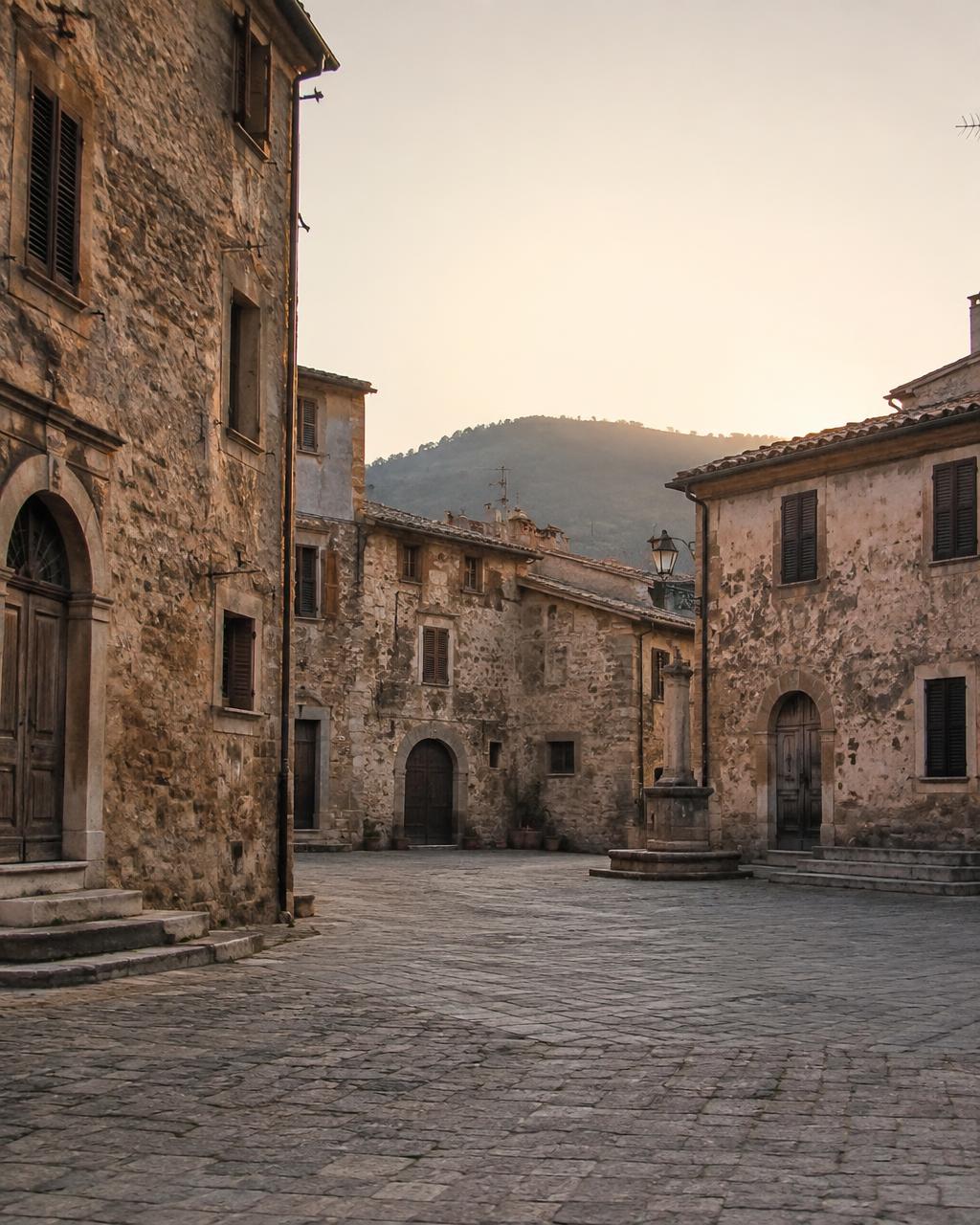
Somewhere like this. We don't know which one yet.
The idea
Buy into a town as a group, instead of buying a house alone.
Italy's small inland towns have been emptying for decades. Young people left for the cities, the houses stayed, and now there are places with more empty doors than occupied ones. Local councils have responded by selling abandoned houses for almost nothing — the famous "one euro" schemes, and dozens of quieter versions of the same thing — to anyone who commits to restoring them.
Plenty of people have done this on their own and ended up with a beautiful house in a town where they know nobody. The bet here is different: go in as a group. Ten, fifteen, twenty of us buying into the same place over a few years, so that when you arrive there are already people you know on the same street.
To be clear about what this isn't. It's not a retreat, not a commune, not a co-living brand. It's a real village with its own people, its own bar, its own arguments — and we'd be moving into it, not building something next to it.
Why this is realistic
The ground is already there.
You actually own it
These are real property purchases with real deeds, not memberships or shares in someone else's project. What you buy is yours.
Enough houses for a village
In the towns worth looking at, it isn't one house going cheap — it's dozens standing empty. There's room for a whole group without crowding anyone out.
The cost of living is lower
Restoration costs money and we won't pretend otherwise. But day-to-day life in a small inland town costs a fraction of what a European city does.
The towns want this too
A commune losing its school and its bus route wants people back as much as we want in. That alignment is the whole reason any of this is possible.
What we're building
Four things we've already decided.
People before the place
The group comes first. We settle on who is in before we settle on where. The right town for the wrong people is still the wrong town.
Most of us keep our jobs
This isn't a retirement plan or a dropout fantasy. Most people carry on working remotely, earning the same, spending less.
A village needs an economy
Residents alone don't make a village. Somebody opens the café, somebody runs the workshop, somebody sells the bread. That has to be real.
Slow, on purpose
This takes years. That's not a disclaimer — it's the method. Nothing good here happens on a schedule set by impatience.
Where things stand
A ledger, not a schedule.
- I
Gathering names
Where we are right now. Finding out who's genuinely interested, and roughly how many of us there might be.
- II
Scouting towns
Building a shortlist of real candidates — houses available, distance to a train and a hospital, what the commune actually wants.
- III
Going to look
A small group visits the best candidates in person, talks to the mayor, and works out what restoration really costs.
- IV
First houses bought
The first of us actually buy. Everything before this is talk; this is where it becomes a place.
Who this is for
A few people, willing to stay.
- —Patient with a long, unglamorous timeline — measured in years, not seasons.
- —Brings a real skill or trade. Something that's useful when the roof leaks.
- —Wants neighbours, not a landlord — and is happy to be one.
- —Would come and visit before committing to anything.
- —Looking for somewhere to be from, not somewhere to escape to.
Join the list
Leave your name, if you'd like to be counted.
No commitment, no money, nothing to sign. Just a way of saying you'd want in if this becomes real.